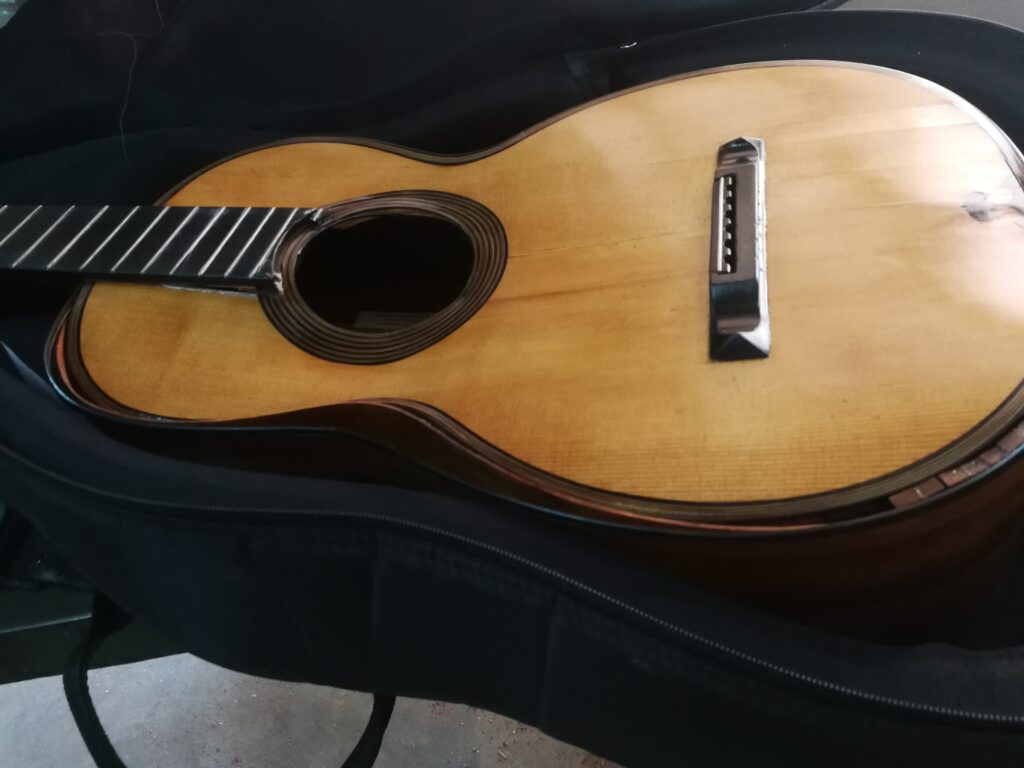
Workshop journal
A precise intervention on a 1915 Manuel Ramírez Spanish guitar with birdseye maple back and sides: removing the worn frets and refretting the instrument with brass.
This 1915 Manuel Ramírez arrived at the workshop with its frets completely worn out. In some areas almost no material remained, so the necessary intervention was highly localised: remove the existing frets and fit replacements consistent with the period of the guitar.
The instrument had already undergone a major restoration in the United States. It had been opened through the back and had a substantial graft beneath the bridge area.
I did not intervene in that repair. The structure was stable, and the problem before me was a different one.
Refretting the Manuel Ramírez with brass
Given the period in which the guitar was built, I considered that it should have brass frets.
The existing frets were completely worn. I removed them and refretted the fingerboard using the same type of material.
Brass is softer than the alloys generally used for modern frets and therefore wears more quickly. But on a Spanish guitar from 1915, it made no sense to choose the material solely for its resistance to wear.
The intervention needed to retain a solution appropriate to the instrument.
No other structural work was required. In this case, restoration meant precisely avoiding any intervention beyond what was necessary.
Condition of the original fretting and installation of the new brass frets.
Birdseye maple back and sides
One of the most visible features of this Manuel Ramírez is the set of birdseye maple used for its back and sides.
The neck is also unusual: it is made from highly figured flamed maple rather than the cedar found in many Spanish guitars from this period.
Both the maple body and the neck have an extraordinary visual presence. The back and sides display the rounded figure characteristic of birdseye maple, while the neck shows continuous flamed figuring.
The guitar also retains particularly elaborate cabinetmaking.
The outer purfling of the soundboard repeats motifs related to the rosette. The bridge carries a fine decorative white strip, and the entire composition maintains a carefully considered visual unity.
These details are characteristic of a guitar built in the Manuel Ramírez workshop, where ornamentation forms part of the instrument without overpowering its proportions.
Birdseye maple, flamed maple neck, rosette, purflings and bridge details.
Specifications of the 1915 Manuel Ramírez guitar
This Spanish guitar has a German spruce soundboard, birdseye maple back and sides and a scale length of 655 millimetres.
The nut is 50 millimetres wide. The spacing between the first and sixth strings is 41 millimetres at the nut and 56 millimetres at the saddle.
The string height at the 12th fret is 2.1 millimetres. The height above the soundboard at the saddle is 9 millimetres.
It has geared machine heads, a French-polished shellac finish and a total weight of 1,340 grams.
The action is particularly low. After the fret replacement, the guitar was once again ready to be played without any need to modify its structure or principal setup.
- Maker and year
- Manuel Ramírez, 1915
- Soundboard
- German spruce
- Back and sides
- Birdseye maple
- Neck
- Flamed maple
- Scale length
- 655 mm
- Nut
- 50 mm wide; 41 mm between the first and sixth strings
- Saddle
- 56 mm between the first and sixth strings
- String heights
- 2.1 mm at the 12th fret; 9 mm above the soundboard at the saddle
- Frets
- Brass
- Machine heads
- Geared
- Finish
- French-polished shellac
- Weight
- 1,340 g
Ali Arango plays Guajiras de Lucía
After the refretting, the 1915 Manuel Ramírez can be heard in the hands of Ali Arango, performing Paco de Lucía’s Guajiras de Lucía.
The recording provides a detailed view of the birdseye maple, flamed maple neck and decorative work of the guitar.
Choro No. 1 on the 1915 Manuel Ramírez
In a second recording, Ali Arango performs Heitor Villa-Lobos’s Choro No. 1 on the same guitar.
The two videos make it possible to hear the instrument in different repertoire after the intervention.
This restoration was limited in scope.
There was no need to open the guitar, correct the previous repair or alter the tornavoz. The work was confined to the fingerboard: removing a set of completely worn frets and fitting new brass ones.
On a guitar more than a hundred years old, a precise intervention can be enough to allow the instrument to continue fulfilling its purpose.
This 1915 Manuel Ramírez was once again ready to be played.
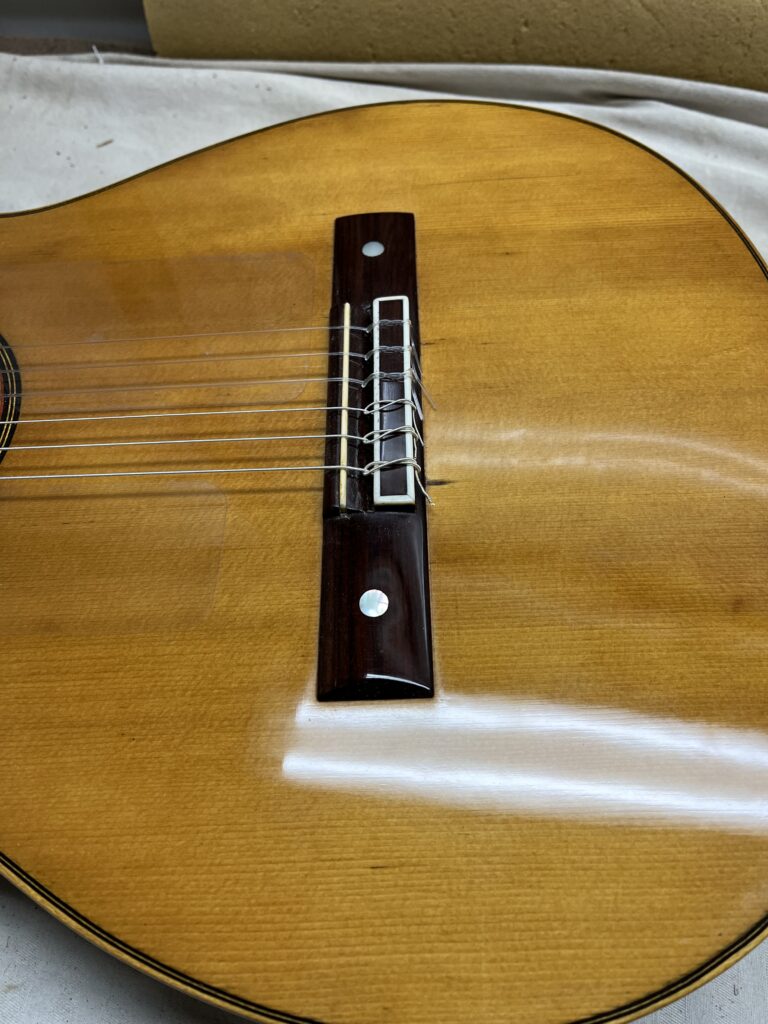
Domingo Esteso 1924: Cracks, Cypress and a Side Fitted Backwards
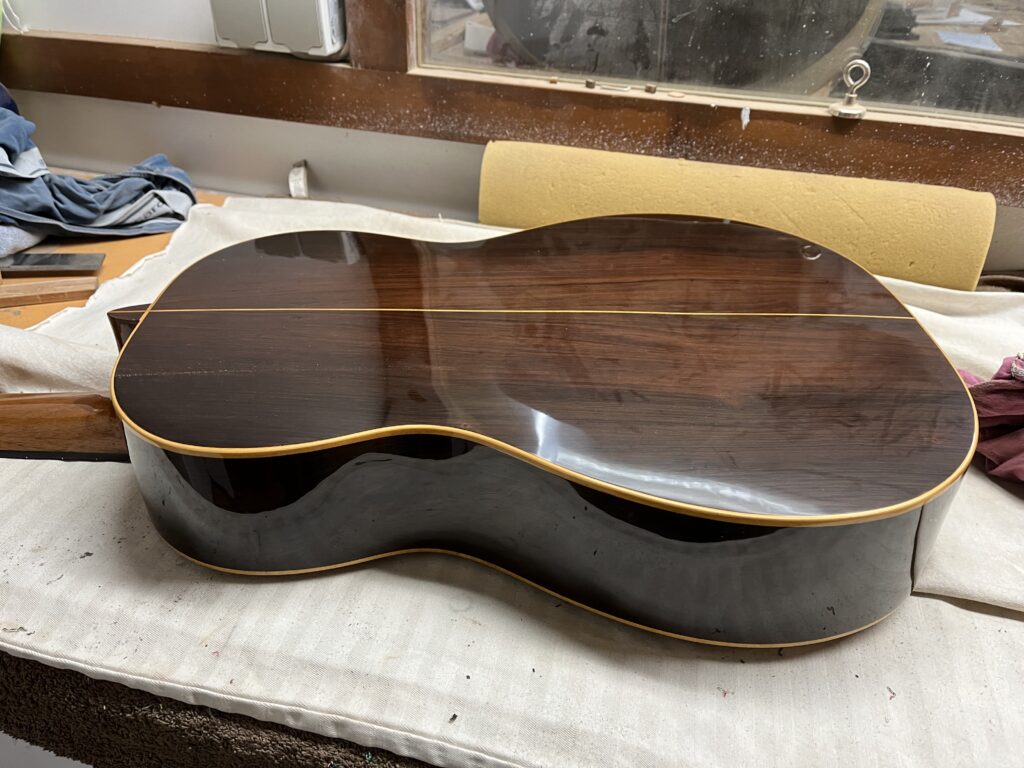
José Ramírez 1933: The Guitar Hidden Beneath a Layer of Black Paint
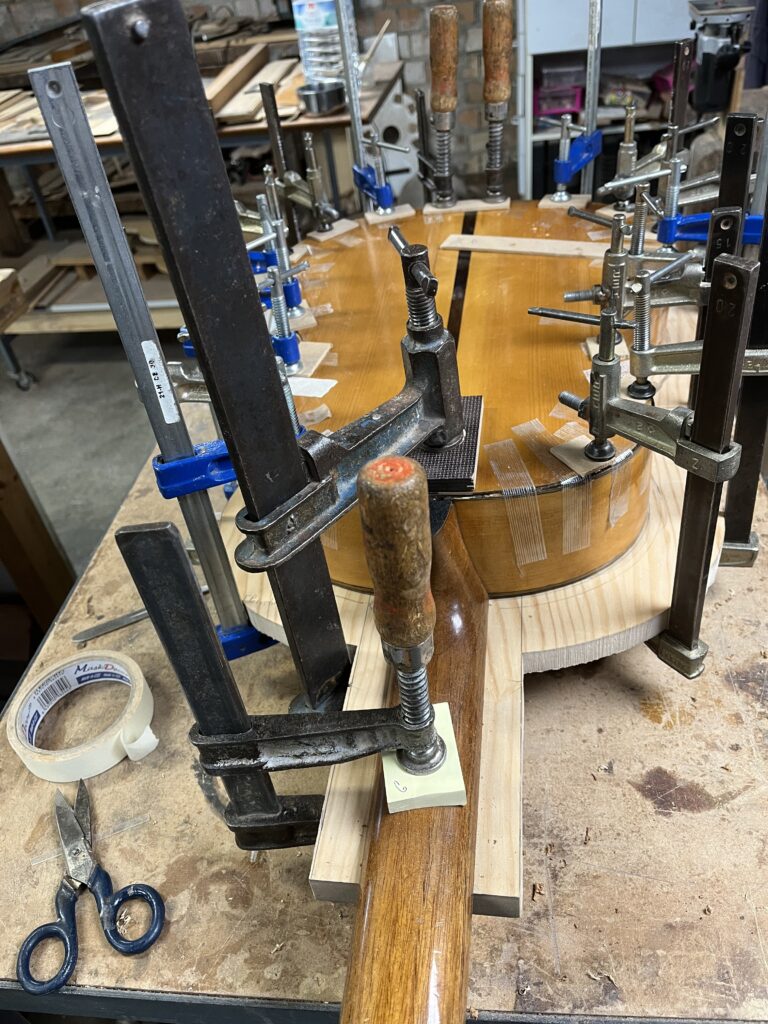
Marcelo Barbero 1949: Saving a Soundboard Just 0.5 Millimetres Thick
Marcelo Barbero 1945: Restoring a Guitar That Had Come Apart Inside
Santos Hernández 1933: Repairing the Sides from Inside the Guitar
Santos Hernández, 1924: Opening a Spanish Guitar After One Hundred Years