Workshop journal
The restoration of a 1933 José Ramírez Spanish guitar completely covered in black paint: revealing the wood, repairing the damage and recovering a French-polished shellac finish.
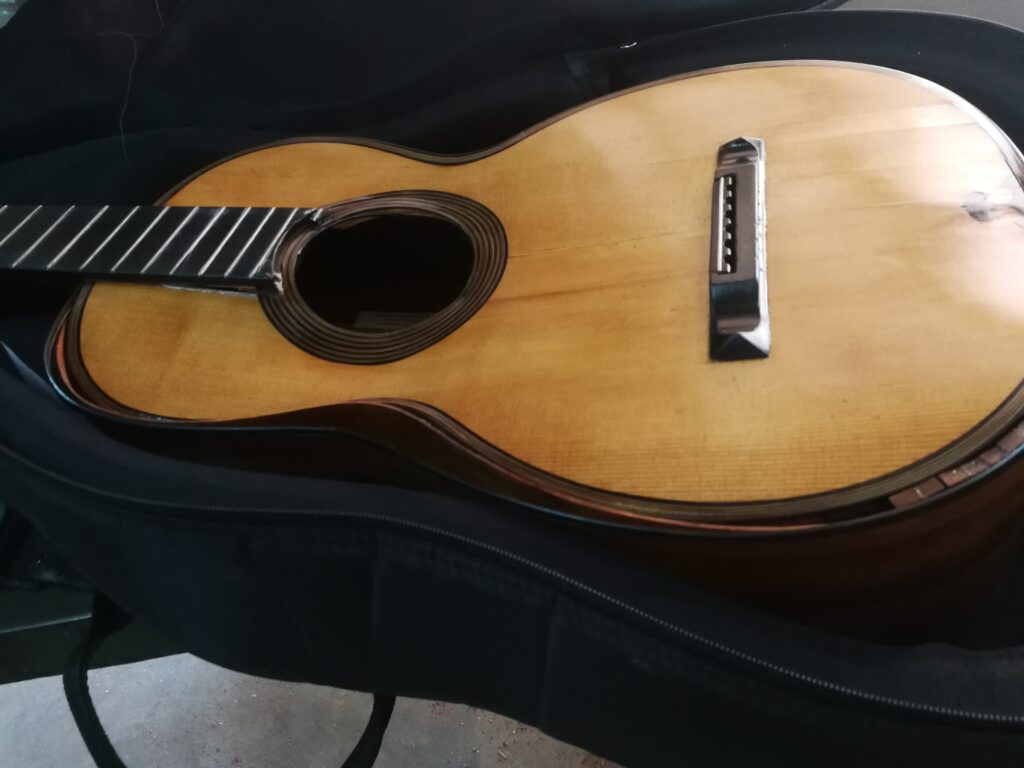
When this 1933 José Ramírez arrived at my workshop, it was completely covered with a layer of black paint. The wood, purflings and many of the guitar’s original details were barely visible.
The instrument had previously been restored by Marcelo Barbero, but at some later point in its history someone decided to paint it. My first task was to remove that layer without taking part of a guitar more than ninety years old with it.
In addition to the paint, a section of the purfling was missing and there were several cracks, including a break in one of the sides.
Rediscovering the wood beneath the black paint
I had to strip the guitar completely.
The problem was not simply removing the black paint. It had to be done without unnecessarily reducing the thickness of the spruce soundboard, the back or the Brazilian rosewood sides.
I cleaned and sanded the surface gradually until the wood was visible again. In this case, there was no earlier finish that could be preserved: the previous intervention had affected the entire guitar, making it necessary to recreate the finish.
Once the paint had been removed, I refinished the guitar with French-polished shellac.
The guitar painted black and the process of revealing its wood.
Reconstructing the guitar’s purfling
A section of the white purfling surrounding the body was missing from one edge.
I cleaned the area and made the missing piece, following the width and continuity of the original purfling. A replacement like this must serve two purposes: properly close the edge of the body again and blend into the pattern without drawing attention to itself.
The intention was not for my addition to be visible. It had to read once again as part of the whole.
A custom tool for repairing the cracked side
The guitar also had a crack in one of its sides.
To close it, I fitted a small reinforcement inside and devised a pressure system using tension rods and aluminium pieces made in the workshop. The pressure had to act from inside the body and precisely on the damaged point.
Tools of this kind often do not exist before a restoration begins. The problem emerges, and the restorer has to design a way to reach it without damaging the rest of the instrument.
Once the crack had been closed and reinforced, I removed the entire system. From the outside, no trace of how the pressure had been applied should remain.
Purfling reconstruction, crack repairs and the custom pressure system made for the side.
The original details revealed beneath the paint
Removing the paint revealed the guitar’s original materials and details once again.
The bridge retains two small mother-of-pearl ornaments, one at each side. It is also possible that they conceal small fastening elements beneath them.
The guitar has a spruce soundboard, Brazilian rosewood back and sides, and a cedar neck.
Original woods and details, with the restored French-polished shellac finish.
Specifications of the 1933 José Ramírez guitar
Its scale length is 650 millimetres. The nut is 52 millimetres wide, and the spacing between the first and sixth strings is 43 millimetres at the nut and 59 millimetres at the saddle.
The string height at the 12th fret is 3.2 millimetres, with a height of 9.6 millimetres above the soundboard at the saddle.
It has geared machine heads, a French-polished shellac finish and weighs 1,330 grams.
- Maker and year
- José Ramírez, 1933
- Soundboard
- Spruce
- Back and sides
- Brazilian rosewood
- Neck
- Cedar
- Scale length
- 650 mm
- Nut
- 52 mm wide; 43 mm between the first and sixth strings
- Saddle
- 59 mm between the first and sixth strings
- String heights
- 3.2 mm at the 12th fret; 9.6 mm above the soundboard at the saddle
- Machine heads
- Geared
- Finish
- French-polished shellac
- Weight
- 1,330 g
The José Ramírez guitar returns to music
After the restoration, the guitar was recorded by Alberto Fernández.
The video shows the instrument without the paint that had concealed its wood and lets us hear once again a guitar built in 1933.
A historic guitar that has passed through many hands
This guitar was built by José Ramírez in 1933. It later passed through the hands of Marcelo Barbero and, at some other point in its history, someone covered it completely with black paint. Finally, it arrived at my workshop so that I could try to recover what still remained beneath it.
I do not know who decided to paint it or under what circumstances. But this case shows how easily information that has survived for decades can be lost.
A historic guitar preserves more than a sound or its maker’s signature. Its woods, tools, techniques and the decisions of an era remain within it, together with the traces of those who played it.
This is why it is so important for musicians, collectors and restorers to continue locating these instruments, studying them and returning them to their purpose.
I do not believe that a historic guitar should become an untouchable object. It was built to make music and, whenever its condition permits, it should continue doing so. But when I work on a guitar like this, I try to remember that I am not intervening only in wood.
I am also working on an object that tells part of the history of the Spanish guitar.
Domingo Esteso 1924: Cracks, Cypress and a Side Fitted Backwards
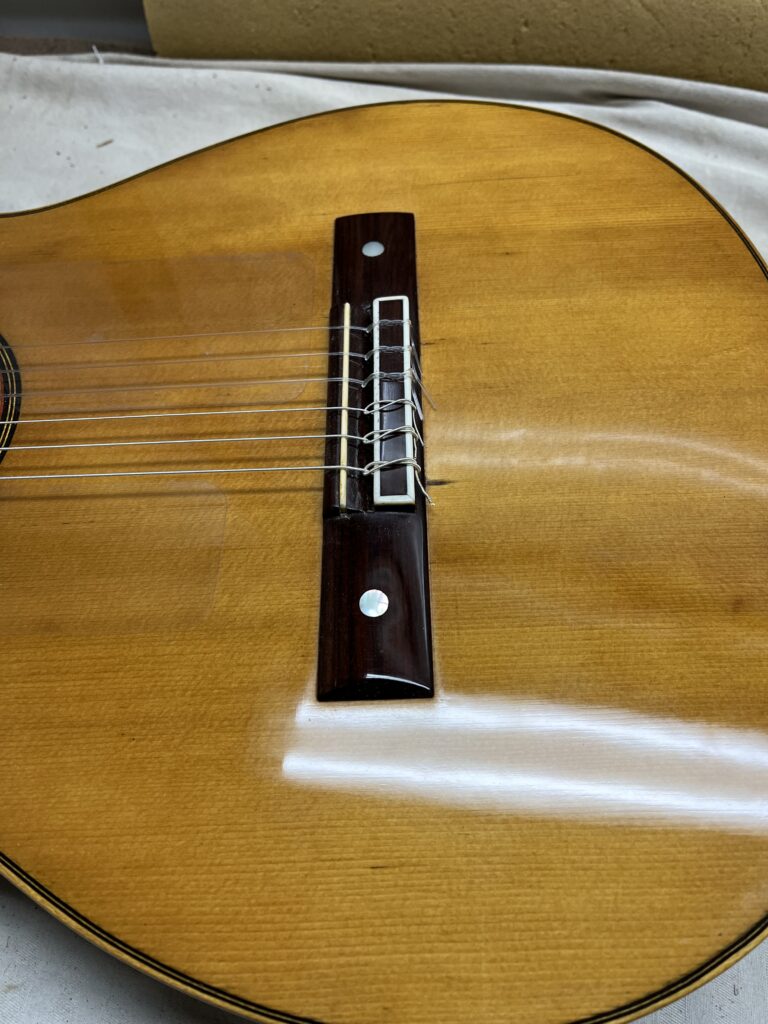
Manuel Ramírez 1915: Birdseye Maple and New Brass Frets
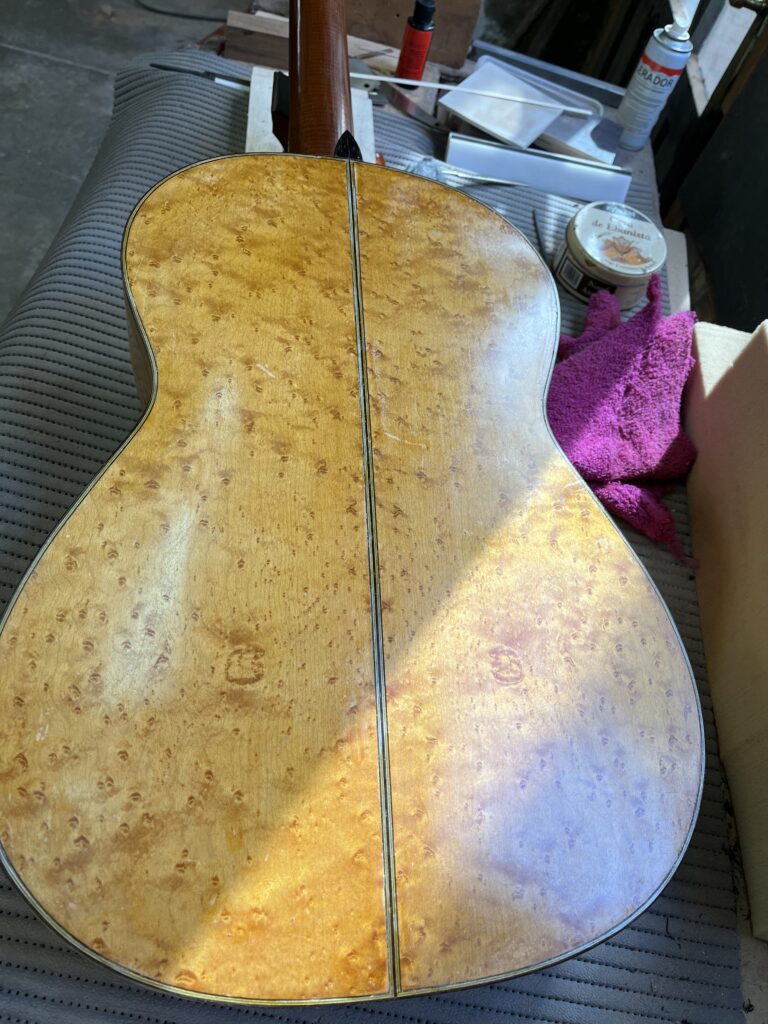
Marcelo Barbero 1949: Saving a Soundboard Just 0.5 Millimetres Thick
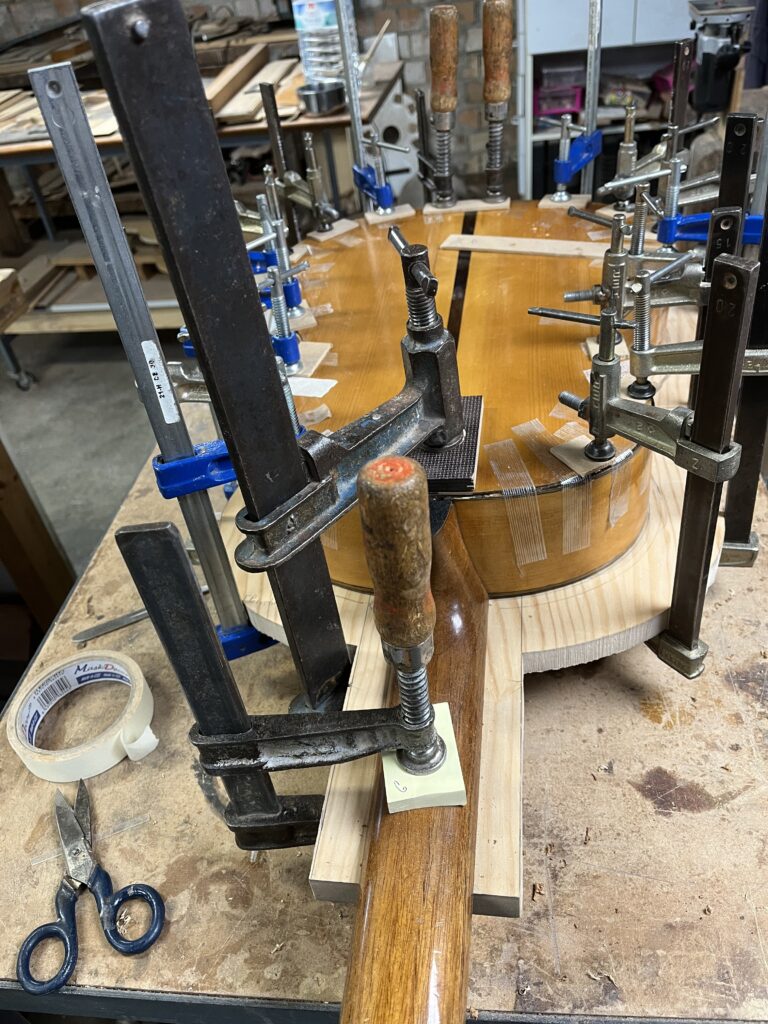
Marcelo Barbero 1945: Restoring a Guitar That Had Come Apart Inside
Santos Hernández 1933: Repairing the Sides from Inside the Guitar
Santos Hernández, 1924: Opening a Spanish Guitar After One Hundred Years
Pablo del Hierro 1856: Rebuilding a Spanish Guitar Piece by Piece